Liquid Propulsion Pioneer
Led the development of liquid propulsion systems for ISRO, critical technology that powered India's satellite launch vehicles and reduced dependence on foreign systems.
A Tribute
The Indian aerospace engineer who revolutionized liquid rocket propulsion at ISRO, endured false espionage charges, and was honoured with the Padma Bhushan.
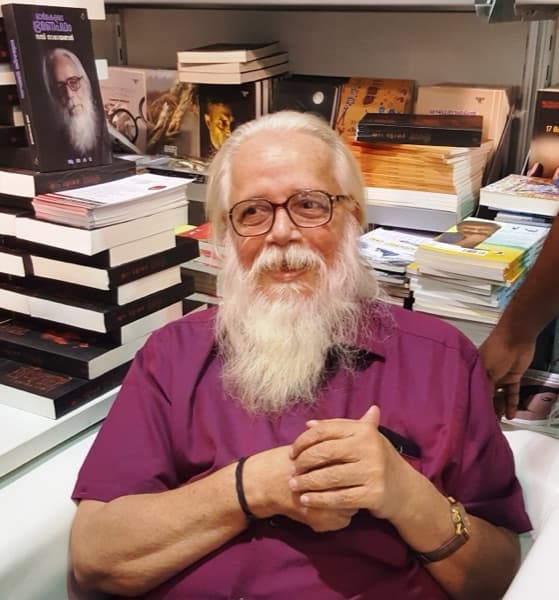
Born 12 December 1941, Nagercoil, Travancore
Education Princeton University (NASA fellowship, 1969)
Known for Vikas engine, liquid propulsion, PSLV program
Award Padma Bhushan (2019)
Nambi Narayanan (born 12 December 1941) is an Indian aerospace engineer who pioneered liquid rocket propulsion at ISRO, led the development of the Vikas engine, was falsely accused in the 1994 ISRO spy case, fully exonerated by the Supreme Court, and honoured with the Padma Bhushan in 2019. His story is one of extraordinary scientific achievement, grave injustice, and relentless perseverance.
“I had to keep the fight alive, it was necessary. I kept myself alive so that I could prove my innocence.”
Nambi Narayanan
Nambi Narayanan was born on 12 December 1941 in Nagercoil, in the princely state of Travancore (now part of Tamil Nadu, India). He grew up during British rule and witnessed the nation's independence as a child.
Graduated from Thiagarajar College of Engineering, Madurai, and immediately joined the Indian National Committee for Space Research (INCOSPAR), the precursor to ISRO, at the Thumba Equatorial Rocket Launching Station in Thiruvananthapuram.
Received a NASA fellowship and went to Princeton University in the United States, where he studied chemical rocket propulsion under Professor Luigi Crocco. He completed his master's degree in a record ten months.
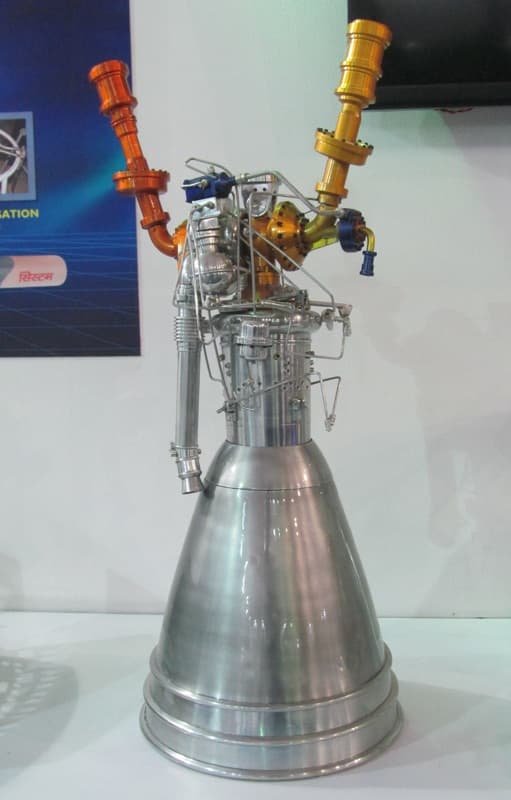
Led the team that developed the Vikas engine, based on technology transfer from the French Viking engine. This engine became the workhorse of ISRO's PSLV, GSLV, and later the LVM3 (GSLV Mk III) launch vehicles.
Arrested by Kerala Police on fabricated espionage charges alleging he transferred rocket secrets to Pakistan through two Maldivian nationals, Mariam Rasheeda and Fauziyya Hassan. He was imprisoned for approximately 50 days and subjected to custodial torture.
The Central Bureau of Investigation (CBI) took over the case, conducted a thorough investigation, and filed a closure report concluding the case was entirely fabricated. No evidence of wrongdoing was found.
The Supreme Court of India upheld the CBI's closure report and dismissed all charges against Nambi Narayanan, effectively ending the criminal proceedings.
In S. Nambi Narayanan v. Siby Mathews (14 September 2018), the Supreme Court awarded Rs. 50 lakh as compensation and constituted a committee headed by Justice D.K. Jain to investigate the role of police officers who fabricated the case.
The Government of India honoured Nambi Narayanan with the Padma Bhushan, the nation's third-highest civilian award, recognising his distinguished contributions to science and technology.
Based on the Jain Committee report, the Supreme Court directed the CBI to register an FIR. In June 2021, the CBI filed an FIR against former Kerala Police and Intelligence Bureau officers, including S.P. Sreekumar, Siby Mathews, and others, for fabricating the espionage case.
Nambi Narayanan's revolutionary contributions to India's rocket technology transformed the nation's space capabilities and enabled self-reliance in a field dominated by superpowers.
Led the development of liquid propulsion systems for ISRO, critical technology that powered India's satellite launch vehicles and reduced dependence on foreign systems.
Headed the team that developed the Vikas engine, derived from French Viking engine technology, which became the mainstay of ISRO's PSLV, GSLV, and LVM3 launch vehicles.
Played a pivotal role in India's efforts to develop indigenous cryogenic rocket technology, essential for placing heavier payloads into geostationary orbit.
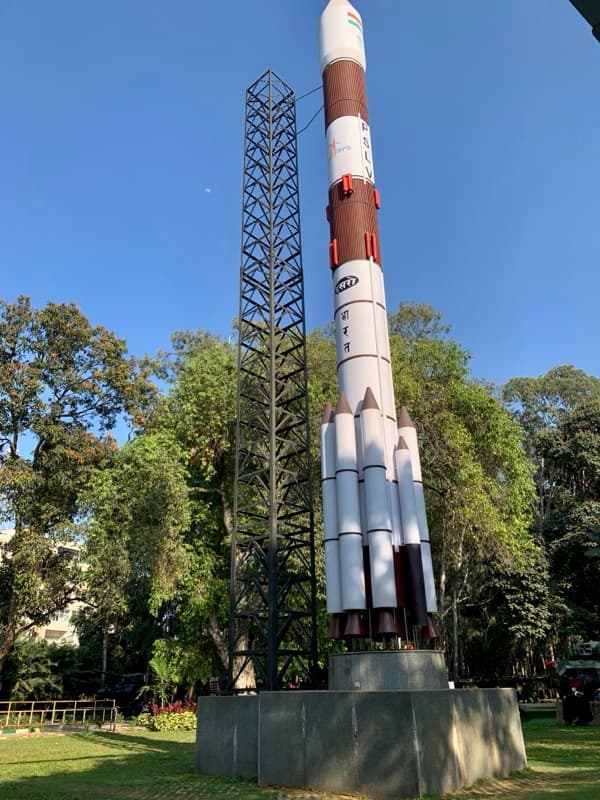
Made significant contributions to the Polar Satellite Launch Vehicle program. The PSLV has completed over 55 successful missions and is considered one of the world's most reliable launch vehicles.
Negotiated and managed the technology transfer agreement with France's SEP (Société Européenne de Propulsion) for the Viking engine, a deal that transformed India's launch capabilities.
Served as Director of the Liquid Propulsion Systems Centre (LPSC) at ISRO, mentoring a generation of Indian rocket scientists and engineers.
The liquid propulsion and cryogenic technologies he helped develop have powered numerous successful satellite launches, including India's Mars Orbiter Mission (Mangalyaan) and Chandrayaan missions, positioning the country as a significant player in the global space economy.
In 1994, Nambi Narayanan was falsely accused of espionage. A dark chapter that revealed extraordinary resilience and an unwavering pursuit of justice spanning nearly three decades.
In 1994, Nambi Narayanan was arrested by Kerala Police on fabricated espionage charges. The allegations claimed he had transferred ISRO rocket technology secrets to Pakistan through two Maldivian nationals, Mariam Rasheeda and Fauziyya Hassan.
He was imprisoned for approximately 50 days and subjected to custodial torture. The case became a national sensation, with media portraying him as a traitor before any evidence was verified.
In 1996, the Central Bureau of Investigation (CBI) took over the case and concluded the case was entirely fabricated with no evidence of any wrongdoing.
The CBI found that the technology in question was not even classified as secret. Despite these findings, the Kerala government attempted to pursue the case further.
In April 1998, the Supreme Court dismissed all charges. In September 2018, in S. Nambi Narayanan v. Siby Mathews, the Court awarded Rs. 50 lakh compensation and constituted the Jain Committee to investigate the officers.
In 2019, he received the Padma Bhushan. In June 2021, the CBI registered an FIR against former Kerala Police and Intelligence Bureau officers for fabricating the case.
Rocketry: The Nambi Effect (2022)
Biographical film by R. Madhavan. Hindi, Tamil, English.
Ready to Fire: How India and I Survived the ISRO Spy Case
Nambi Narayanan & Arun Ram, 2018
First-hand account of his life, career at ISRO, and the fabricated espionage case.
ISRO: A Personal History
R. Aravamudan & Gita Aravamudan, 2017
Insights into ISRO's development with references to Narayanan's contributions.
Supreme Court Judgment (2018)
S. Nambi Narayanan v. Siby Mathews & Others
Landmark judgment awarding compensation and constituting the Jain Committee.
Rocketry: The Nambi Effect
Dir. R. Madhavan, 2022
Biographical film released in Hindi, Tamil, and English.
Press Archives
The Hindu, Indian Express, Times of India
Contemporary reporting on the ISRO spy case over three decades.